Evolution Of Slavery
Throughout history, slavery changed immensely. Slaves came with many hardships, but overcame them all and created a new chapter in American History. The slave trade became increasingly popular as more slaves were being shipped to North America. One slave auction, being held aboard the slave ship in the port of Charleston, South Carolina, placed an ad in town advertising the slaves. The 250 negros aboard the ship were said to have been given the utmost care to keep them free from small pox.
Then it also states that one half of the negros have had the small pox in their own country. Having black slave auctions such as this made buying and trading slaves easier, causing the increase of black slaves in North America.Many times in history slavery was a controversial topic. A section from Thomas Jefferson s handwriting draft of the Declaration of Independence contains a passage condemning the slave trade. The passage was omitted in the final draft because Georgia and South Carolina planters who needed slaves. In addition to the New England shippers who sometimes participated in slave trading. These different views made slavery proceed on. The British disliked the inconvenient declaration of equality through humanity, as the Americans quarreled with the question of what to do with slaves, who were escaping and running away.
Lord Dunmore, the royal governor of Virginia, issued a proclamation on November 7, 1775, granting freedom to slave who escaped from his master and joins the British force. The proclamation states, 'And I do hereby further declare all indented Servants, Negroes, or others, (appertaining to rebels,) free that are able and willing to bear Arms, they joining His Majesty s Troops ' In response to Lord Dunmore s proclamation, Virginia s General Conventions a declaration threatening death to any slave caught trying to join the British side. This Declarations stated that, 'it is enacted, that all negro or other flaves, confpiring to rebel or make infurrection, fhall fuffer death and be excluded all benefit of clergy ' Slaves were now forced with the decision of death or slavery. In disregard to the threat of death, some blacks went to fight for the British. A black man, named Ty, was loyal to the British flag and led twenty men, both white and black, in an attack on American forces.
Ty s group managed to take two prisoners and capture horses and ammunition. An article of the British having 'a great number of sailors, marines, militia, and armed blacks.'
A letter from Manmouth country states, 'Ty is a Negroe, who bears the title of Colonel, and commands a motly crew at Sandy Hook.' In this time period, it was uncommon for blacks to have authority or title in the military. In disregard to the death of threat upon blacks for fighting with the British, many blacks proved to be great heroes.
In addition to the blacks who fought for the British, there were still those who fought against it. Crispus Attuck, a former slave, fought in the Boston Massacre. In an account of the burial of the victims, it tells of Attuck as 'a hero of the revolutionary era for his role in the incident.' It also shows four coffins with initials on them. The far right one has the initials for Attucks.
In addition to his initials it shows the initials of Samuel Gray, Samuel Maverick, and James Caldwall. Attucks was 'the first to defy, and the first to die.'
Even through their many years of slavery in our country, blacks proved loyal through fighting in the war. Over time slavery slowly became less common. Most Northern states enacted laws that called for the gradual elimination of slavery. According to New Jersey law, any child born to a slave 'shall remain the servant of the owner of his or her mother. Until the age of twenty-five, if male, and if a female until the age of twenty-one.' Slavery was seen as something that had to be abolished voluntarily, usually with some type of compensation to the former slave owners. People thought that it would be too great of a public expense, so the compensation was not directly from the government.
Evolution Of Slavery In America
Even though, slaves were let free to start their new life in the colonies. Slaves progressed greatly in the 1800 s. They came over in horrid slave ships, were treated like animals, but through it all beat the odds and came to be a respected part of American History. This shows that anything can be accomplished with a little effort.
Evolution Of Slavery After 1793
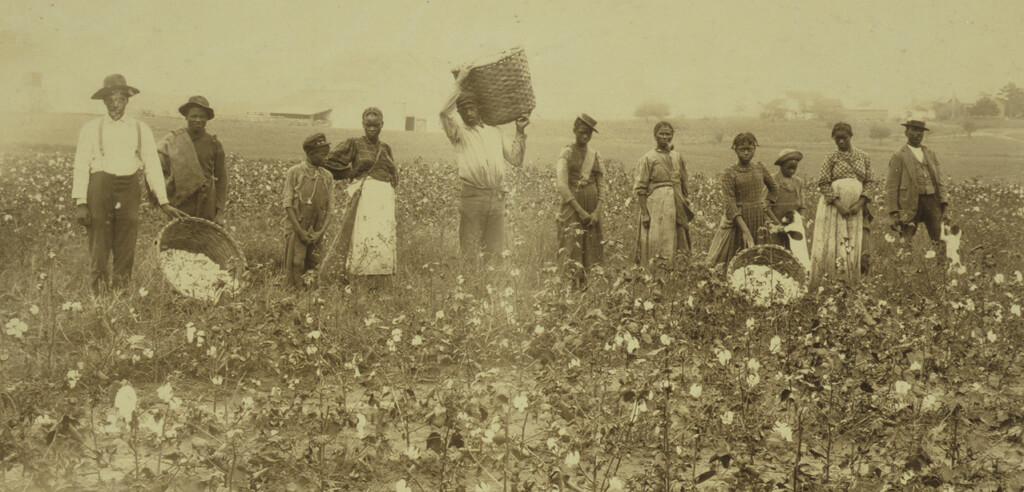
What is a slave? The dictionary defines a slave as a person held in bondage to another (Merriam 1091). The root of the word is a national name 'Slav.
The adaptation of 'Slav- to 'slave- came from the time when the Germans supplied the slave markets of Europe with captured Slavs (Meltzer 3). A slave, then, is a man who is the property of another. To possess a man deprives that man of developing his own humanity; slavery prevents him from developing a sense of human dignity. Therein lies the moral disaster which slavery created. Slavery itself was not an institution that developed alone.
It was an institution developed by humans, justified in moral issues and biblical beliefs that were enhanced by economic incentives. Slavery has been in existence for many centuries. The Romans used slaves to build their empires. Feudal lords used serfs to do their work. Even in Africa, royal kings used slaves to build and protect their empires.
However, this early slavery was nothing like the slavery which developed in the seventeenth and eighteenth centuries mainly due to the new arena 'America and their need for laborers. The issue of slavery is complex. Inherent in these issues are core principles of morality, freedom, and greed. Slavery as it existed in the 17th and 18th centuries literally changed the world. It brought wealth and riches to a new land. It gave to America the basic tool in which the country grew and prospered. According to Thomas, 'most of the great enterprises for the first four hundred years of colonization owed much to African slaves- (12).
How did slavery come about? Many believe that there is no one answer to this question (Thomas 15). But it is clear that the unbelievable growth of slavery lay in its economic benefits. However, in order to justify such brutality to humans, many rationalized their actions by looking into the Bible or believing in the natural inferiority of blacks over whites.
('Evolution- 2). 'Many other early societies indulged in slavery,'('Evolution- 3) such as the Romans, who once collapsed, spread the practice throughout history. 'Since slavery has always been the economical foundation for ancient civilizations, societies knew no other way- ('Evolution- 3). The Egyptians, Mesopotamia, Romans, Cymry, and the Vikings all practiced slavery, however the Anglo-Saxons were the most unique because there was numerous ways to become a slave and ways to be set free from slavery ('Evolution- 3).

Large taxes were imposed on slavery and in 1102 the We. Word Count: 2726. Approx Pages: 11. Grade Level: High School.
The Evolution of Slavery The institution of slavery has long been in practice in the Americas but was first made common in Virginia where sailing traders would barter their 'slaves' for food. By the time of president Thomas Jefferson's death in 1826, slavery had taken a dramatic course in American society.
During the 1760s, the first movements in history began to denounce slavery. The earliest groups to oppose slavery were 'perfectionist' religious sects like the Quakers who challenged all traditional authorities and wanted to live free from sin. With the southern economy. Avenir font family for mac free.
Word Count: 1042. Approx Pages: 4. Grade Level: Undergraduate. It was not that Lincoln wanted slavery preserved, he said he is naturally anti-slavery, however as president, he was bound by the Constitution, which protected the institution of slavery in the states.
As a result Lincoln opposed any further extension of slavery in new federal territories and thought that slavery would gradually go extinct arguing that it could artificially inflate the power of the Democratic Party. Since Abraham Lincoln's thoughts on race and the Constitution was observed, it can be applied to his evolution on his thoughts on how to approach compromising the institut. Word Count: 2007. Approx Pages: 8. Grade Level: Graduate. Davis came somewhat indirectly to slavery studies.
Somewhat one third of the book deals with slavery and anti-slavery. Orlando Patterson's sweeping world-wide study of slavery and the image of blacks in western art. In his time at Dartmouth and Harvard, slavery and race occupied almost no place in the curriculum. After tracing the cultural heritage of these ideas from Plato and Aristotle, through the evolution of Christianity, into the thought of the Enlightenment and the seemingly paradoxical strengthening of both rationalist and evangelical impulses in the course of the.
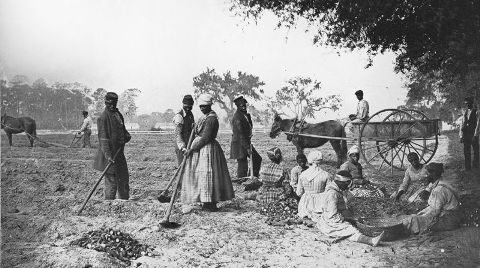
Word Count: 1915. Approx Pages: 8. Grade Level: Undergraduate. Slavery was a good thing. This was the dominating theory of racial slavery in the United States under the supervision of U.B.
Sparking the argument is Stanley Elkins in his book, Slavery, released in 1959. Again, the slaves, being conscious of their situation and material value, may murder their children to deny their master's free capital and save the children from the horrors of slavery. African-Americans reacted to slavery by developing a type of split-personality. Word Count: 1054. Approx Pages: 4. Grade Level: Undergraduate.
Introduction In this paper we will analyze the evolution of individual rights and liberties in England and the Colonies in the Americas during the years preceding the Constitutional Convention. On top of all this slavery became another issue. This was solved with the advent of black African slavery. Slavery solved several of these problems. The second problem slavery solved was that they were never released from slavery and so could not gain a foothold in society to compete against the landholders. Word Count: 1163.
Approx Pages: 5. Has Bibliography. Grade Level: High School.